
Walk through any mid-market food and beverage plant in Australia right now and you'll find the same tension: rising input costs, tightening margins, a workforce harder to retain, and a growing pile of technology promises that haven't yet delivered.
The questions are urgent. The solutions exist. But most manufacturers are making decisions in isolation — without seeing what their peers have tried, what actually works at scale, and where the industry is genuinely heading.
That is exactly why events like foodpro matter. And why 2026 may be the most important edition of the event in a generation.
THE NUMBERS BEHIND THE INDUSTRY
A $145 billion sector — and a critical turning point
Australian food and beverage manufacturing is not a niche industry. It is the backbone of the nation's manufacturing economy — and it is at a crossroads.
The headline numbers are significant:
| Metric | Figures |
| F&B market size (2025) | AUD 145 billion |
| Projected market size (2035) | AUD 222 billion (CAGR 4.34%) |
| Number of F&B businesses | 33,000+ |
| SME share of sector | 87% |
| Gross value-added (2022–23) | $31.8 billion |
| F&B as % of total manufacturing | ~33% |
| Avg food manufacturer revenue (Q4 2025) | $709,831 |
| Avg beverage manufacturer GP margin (Q4 2025) | 35.9% |
But numbers alone don't tell the full story. What they point to is an industry large enough to matter enormously to the national economy, yet one where 87% of businesses are SMEs — operating without the capital, systems, or expertise of the global majors, but facing exactly the same cost, compliance, and technology pressures.
That is the structural tension that mid-market manufacturers are navigating every day.
THE STATE OF AUSTRALIAN F&B MANUFACTURING
Five pressures every operator is managing simultaneously
The challenges facing the sector are not new. But in 2026, they are converging. Energy costs, workforce constraints, regulatory burden, and the technology gap are hitting at the same time — and the margin for error is getting thinner.
| Challenge | Current Reality | Implication for Operators |
| Rising input costs | 78% of businesses expect input prices to rise further in 2026 | Margin compression across all product categories |
| Workforce shortages | Projected packer workforce gap of ~5,000 workers by 2035 | Production continuity risk; rising labour overhead |
| Regulatory compliance | Regulatory burden rated most negative factor by business leaders (-97 net balance) | Manual compliance tracking is no longer sustainable |
| Disconnected systems | Most plants have digital tools but run on disconnected data | Supervisors lose hours manually chasing documentation each shift |
| Technology adoption gap | Sector has been historically slow to adopt ERP and digital systems | Falling behind on efficiency, traceability and AI readiness |
| "Food and beverage manufacturers are facing mounting pressure to reduce waste, improve efficiency and meet sustainability targets — all while managing rising energy costs and labour shortages." — Louise Brooks, Event Director, foodpro 2026 |
The workforce challenge deserves particular attention. Research from Oxford Economics commissioned by the Australian Food and Grocery Council identifies a structural problem that goes beyond short-term recruitment: the sector's workforce is ageing, retention is failing, and the projected packer workforce gap alone is expected to reach 5,000 workers by 2035.
And beneath all of it sits a systems problem. The challenge in most mid-market plants is not a lack of digital tools — it is that those tools don't talk to each other. Quality data lives in one system. Production in another. Finance in a third. Supervisors close shifts manually reconciling data across disconnected platforms, losing time and visibility that should be driving decisions.
That 'invisible tax' on operations is what keeps manufacturers reactive instead of strategic.
WHY INDUSTRY EVENTS ARE NOT OPTIONAL
The decisions you make this year will shape the next five
There is a version of this industry's future that looks very different from today. Automated processing lines with real-time production visibility. AI-supported demand forecasting that reduces waste and protects margin. Compliance managed automatically, not manually chased. Traceability from farm to shelf, audit-ready at any moment.
That future is not theoretical. It is being built right now — and the manufacturers who see it first, evaluate it critically, and implement it thoughtfully will be the ones who lead.
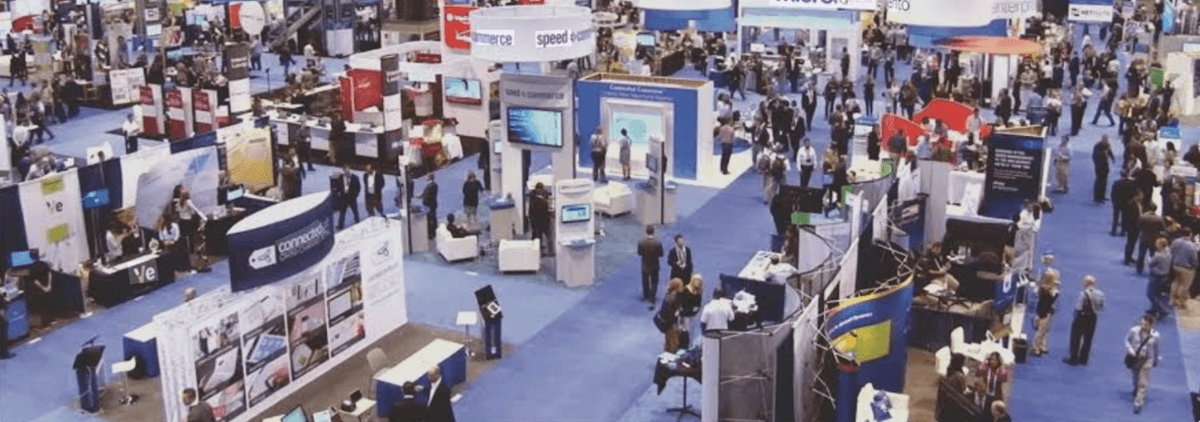
Industry events exist precisely to close the gap between where manufacturers are and where the industry is going. They compress years of research into four days. They allow decision-makers to see live equipment demonstrations, compare 400-plus solutions side by side, and have the kinds of conversations with peers and suppliers that don't happen any other way.
For mid-market manufacturers specifically, the ROI of attending goes well beyond finding a vendor:
- -Benchmarking where your operations sit relative to the rest of the sector
- -Evaluating technology in person before committing to an investment decision
- -Understanding what regulation and sustainability requirements are coming — not just what is already here
- -Accessing the co-located AIFST Conference: food science and research shaping the industry's future, on the same floor as the suppliers solving its problems today
- -Building supplier and peer relationships that improve your commercial position for years ahead
- -Hearing directly from the Innovation Stage — free sessions running across all four days on automation advances, sustainability breakthroughs and emerging manufacturing technologies
FOODPRO 2026 — AT A GLANCE
Australia's largest food manufacturing gathering returns to Melbourne
foodpro returns to the Melbourne Convention and Exhibition Centre from 26 to 29 July 2026 — its most ambitious edition in over 50 years. Here is what you need to know:
| Detail | Information |
| Dates | 26–29 July 2026 |
| Venue | Melbourne Convention and Exhibition Centre (MCEC) |
| Exhibitors | 400+ across processing, packaging, digital, logistics, ingredients & business services |
| Expected visitors | 9,000+ industry professionals |
| Exhibition space | 30,000 sqm across 10 dedicated segments |
| New for 2026 | Dedicated FMCG segment; AIFST Conference co-located across all 4 days |
| Opening event | Industry Connect Evening – 26 July, Melbourne Public along the Yarra |
| Visitor cost | Free registration for industry professionals |
| ThynkProcess booth | Booth J35 |
The show floor spans 30,000 square metres, covering every stage of food and beverage production — ingredients, processing, packaging, cold chain, digital factory solutions and business services. For the first time in 2026, a dedicated FMCG segment connects food manufacturers with high-speed portioning, packing, labelling and retail-ready solutions.
The AIFST Conference runs across all four days this year — a significant change from previous editions — bringing food science professionals, researchers, regulators and industry stakeholders into the same venue as the commercial exhibition. That combination of science and supply chain, under one roof, is genuinely rare.
| Visitor registration is free for all industry professionals. Early bird tickets for the Industry Connect Evening are available now at $119 + GST. Register at foodproexpo.com. |
THYNKPROCESS AT BOOTH J35
Come and talk operations with us
ThynkProcess will be exhibiting at foodpro 2026 at Booth J35.
We work with mid-market food and beverage manufacturers on the operational and systems challenges that sit between the plant floor and the boardroom: traceability gaps, disconnected data, ERP implementations that did not deliver what was promised, and process improvements that got started but never embedded.
The conversations we have with manufacturers on the shop floor are often very different from the conversations that happen in boardrooms. The real problems — the ones costing margin every week — are usually not the ones that made it into a project plan. They are the ones that supervisors have learned to work around.
If you are walking the show floor at foodpro, we would genuinely like to talk. Not to pitch. To understand what your operation is dealing with right now, and whether there is something we can help with.
Come and find us at Booth J35. The conversations that happen at events like these are often the ones that matter most.